
Is Your Olive Oil Really Olive Oil? A Clear, Evidence-Based Response to the Viral “80% Vegetable Oil” Claim
- Noël King
- Jan 23
- 3 min read
A recent viral article by Krista Torres, titled “It Could Be Up To 80% Vegetable Oil”: This Woman Went Viral For Showing How To Tell If Your Olive Oil Is 100% Pure, has reignited a long-standing concern many consumers already feel: Can we trust what’s in the bottle?
The short answer: some skepticism is healthy—but the viral claim oversimplifies the truth and risks replacing misinformation with a new myth. Let me break down what actually matters, what doesn’t, and how you can take informed action.
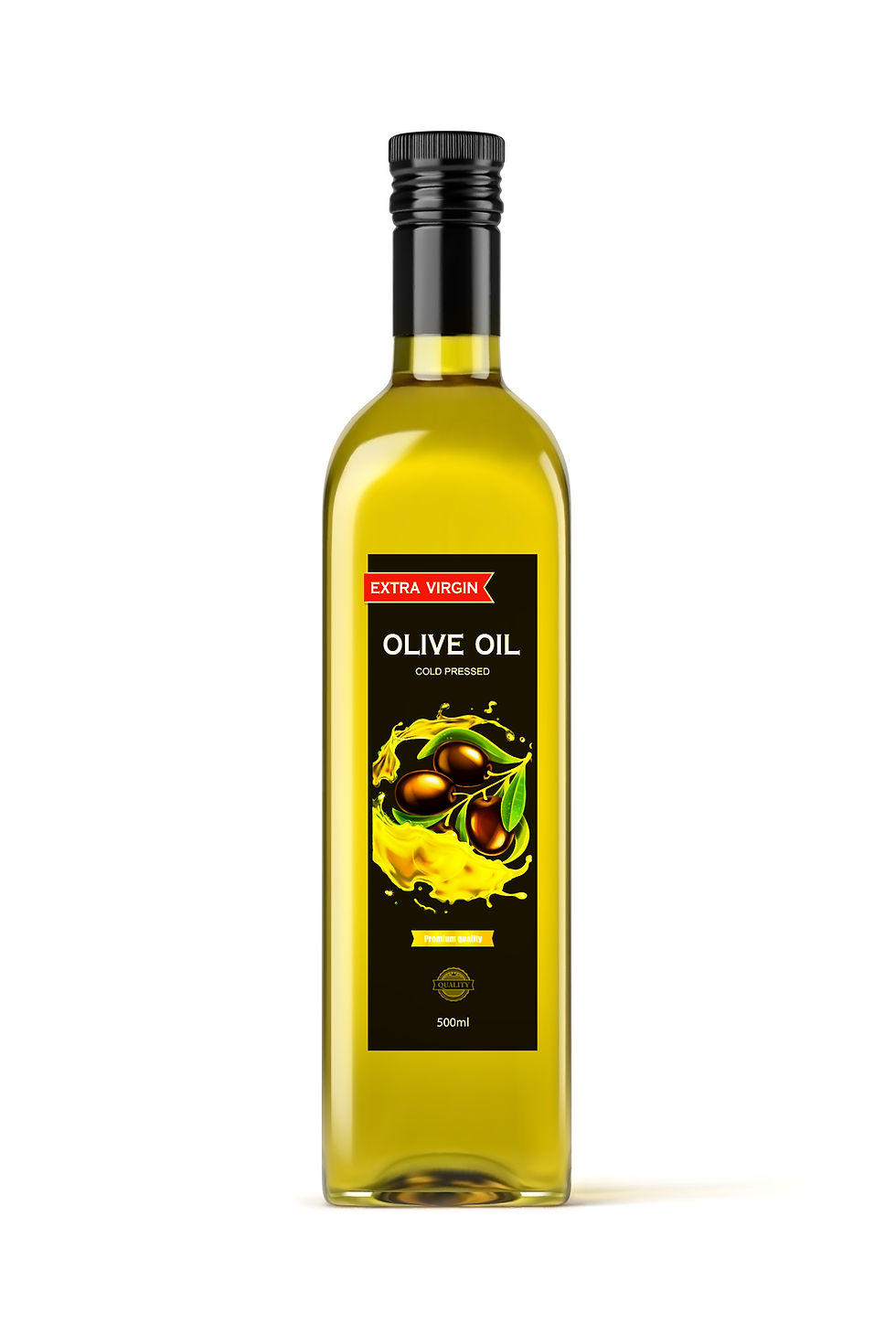
Understand, I am not here to throw shade; I'm here to inform you properly. Let's get to it!
The Viral Claim: “No Harvest Date = Not 100% Olive Oil.”
One of the central ideas promoted in the viral post is that if an olive oil bottle does not list a harvest date, it is probably not pure olive oil and may be mostly vegetable oil.
This claim sounds compelling—but it is factually incorrect.
Here’s the reality:
There is no legal requirement in the U.S. or most international markets for olive oil bottles to list a harvest date.
Many legitimate, 100% olive oils—including reputable, widely sold brands—do not include a harvest date.
The absence of a harvest date does not indicate adulteration with soybean, canola, or other vegetable oils.
In other words, No harvest date does not mean fake olive oil.
What the Absence of a Harvest Date Actually Means
While it is not a sign of fraud, a missing harvest date often signals something else—usually related to quality, freshness, or production scale, not purity.
Most commonly, it means one or more of the following:
1. The oil is blended
Large producers often blend oils from multiple harvests and regions to maintain consistent flavor. Listing a single harvest date would limit that flexibility.
2. The oil is refined, not extra virgin
Products labeled simply as “olive oil” or “pure olive oil” are typically refined oils blended with some virgin olive oil. They are still 100% olive-derived, but they are not extra virgin and lack freshness markers.
3. The oil is mass-market
Commodity olive oils prioritize long shelf life and uniform taste. Transparency around harvest timing is more common in small-batch, premium oils.
What Does Signal Higher Quality Olive Oil
If your goal is fresh, high-quality extra virgin olive oil (EVOO), these indicators matter far more than a viral rule of thumb:
Clearly labeled “Extra Virgin Olive Oil”
A best-by date within 18–24 months of harvest
Single origin or estate-bottled language
Dark glass or metal containers (never clear plastic)
Terms like cold extracted or first cold press
Recognized certification seals (IOC, COOC, NAOOA)
A harvest date is helpful—but it is one data point, not a purity test.
When You Should Be Concerned
Red flags emerge when multiple warning signs appear together, such as:
No harvest date and
No country of origin
Extremely low price
Clear plastic bottle
Vague phrases like “packed in” rather than “produced in”
Context matters. Labels must be evaluated as a whole.
Can Apps Help You Verify Olive Oil Claims?
Yes—but with limits.
In a previous post, “3 Must-Have Apps: Yuka, Open Food Facts, and Trash Panda,” I explained how technology can help consumers cut through marketing noise. These tools can absolutely support smarter choices—if you understand what they can and cannot do.
How These Apps Can Help
Yuka-Flags additives, nutritional profiles, and some processing concerns.
Open Food Facts-Offers crowd-sourced ingredient transparency, sourcing notes, and processing data.
Trash Panda-Helps evaluate packaging, environmental impact, and corporate practices.
Their Limitations
They cannot chemically test oil purity.
They rely on manufacturer disclosures and databases.
They may not distinguish refined olive oil from extra virgin olive oil unless clearly labeled.
Use them as decision-support tools, not final arbiters of authenticity.
The Bigger Issue: Confusing Quality With Fraud
The real danger of viral claims like “80% vegetable oil” is not awareness—it’s oversimplification.
Yes, olive oil fraud has existed historically.Yes, some low-quality oils are misleadingly marketed.
But suggesting that most olive oil without a harvest date is fake:
Distracts from legitimate quality markers
Erodes trust without evidence
Replaces education with fear
The Bottom Line (and Your Call to Action)
Lack of a harvest date does not mean olive oil is not 100% olive oil
Harvest dates indicate freshness and premium quality, not authenticity
Learn to read the entire label—not just one viral cue
Use transparency tools wisely
Reward brands that disclose sourcing, processing, and quality standards
Informed consumers change markets. Not by panic—but by precision.
If you want to reduce misinformation, protect your health, and spend your money wisely, the most powerful tool you have is not a viral hack—it’s understanding why the label says what it says.
"It is not what you don't know that gets you in trouble; it's what you know for sure that just ain't so."--Mark Twain

Comments